
Expungements for Domestic Violence Charges
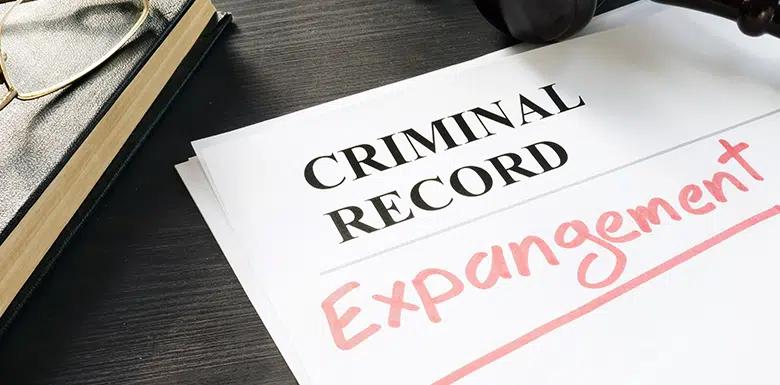
If you have been charged with or convicted of domestic violence in Tampa, you may be ready to put that part of your life behind you and move forward. Depending on your case, you could qualify for expungement. Expungement seals your criminal record and hides your domestic violence charges from state or federal public databases.
Expungement is not automatic; criminal charges and convictions remain on your record in Florida unless you actively seek an expungement or record sealing.
Domestic violence charges are considered to be a “dangerous crime.” The rules for qualifying offenders seeking expungement of domestic violence charges are strict.
Here’s how to apply for expungement for domestic violence charges in Tampa.
What to Do Right Now If You Are Facing Domestic Violence Charges
If you are currently facing domestic violence charges, and expungement is something you want to preserve as an option, your defense strategy today directly affects your eligibility later. Take these steps:
- Contact a Tampa domestic violence defense lawyer immediately. The plea you accept today determines whether expungement is possible in the future. An experienced attorney can negotiate a resolution that preserves your eligibility.
- Do not accept a plea to a domestic violence charge without legal advice. If you plead to a DV offense, even with a withhold of adjudication, you lose your right to expunge the record. Your attorney may be able to negotiate a plea to a non-DV offense instead.
- Preserve all evidence. Save text messages, photos, and witness contact information. Strong evidence supports a defense that can lead to dismissal, which is the clearest path to expungement.
- Obtain your case number. You will need this for all future filings, including the COE application.
- Do not speak to police without counsel. Anything you say can affect both the criminal case and your future expungement options.
When Can a Domestic Violence Charge Be Expunged?
You can seek expungement for domestic violence charges if:
- No official domestic violence charges were filed
- The state dropped the charges
- The court dismissed the charges
- The court returned a not guilty verdict
You cannot seek expungement if you accept a plea agreement to a domestic violence charge and are awarded a withhold of adjudication.
Expunction vs. Sealing: What’s the Difference?
Florida law distinguishes between expunction and sealing, and the difference matters:
- Expunction (Florida Statute §943.0585): The criminal record is physically destroyed by the custodian of records. Once expunged, the record no longer exists in any public database. You may lawfully deny the arrest ever occurred in most circumstances (with limited exceptions for law enforcement applications and certain professional licenses).
- Sealing (Florida Statute §943.059): The criminal record is removed from public view but is NOT destroyed. Sealed records remain accessible to law enforcement agencies, the Florida Department of Law Enforcement (FDLE), and certain licensing boards. You may lawfully deny the arrest in most circumstances, but the record can be “unsealed” by court order.
For domestic violence charges, the distinction matters because domestic violence is classified as a “dangerous crime” under Florida law. This means: if you were convicted of domestic violence (even with a withhold of adjudication), you are not eligible for expunction or sealing under §943.0585(1)(b). However, if your charges were dropped, dismissed, or you were acquitted, expunction is available.
How a Withhold of Adjudication Affects Eligibility
This is one of the most misunderstood aspects of Florida expungement law. For most criminal offenses, a withhold of adjudication makes you eligible for record sealing. However, domestic violence is an exception: under Florida law, you cannot seal or expunge a domestic violence charge if you accepted a plea with a withhold of adjudication to a domestic violence offense specifically. This is why the defense strategy at the plea stage is so critical. Your attorney must negotiate a plea to a lesser charge that is NOT classified as domestic violence if you want to preserve your expungement eligibility.
Disqualifying Factors
You may not be eligible for expunction or sealing if:
- You were convicted of (adjudicated guilty of) the domestic violence charge
- You accepted a withhold of adjudication on a domestic violence charge specifically
- You have a prior expunction or sealing on your record (Florida allows only one)
- You have a prior conviction for certain enumerated offenses (sexual battery, robbery, aggravated battery, etc.)
- You are currently under court supervision (probation, community control)
An experienced Tampa expungement lawyer can evaluate your specific case and determine your eligibility.
How to Clear Your Record of a Domestic Violence Charge
The Florida Department of Law Enforcement offers a Certificate of Eligibility to qualifying individuals who want their records sealed. Your attorney will obtain a copy of your COE and include it with your petition to have your record sealed.
Step-by-Step: The Expunction Process in Florida
Step 1: Obtain a Certified Disposition. Get a certified copy of the final disposition of your case from the Hillsborough County Clerk of Court (800 E. Twiggs Street, Tampa). This document shows whether the charges were dropped, dismissed, or resulted in acquittal.
Step 2: Apply for a Certificate of Eligibility (COE). Submit an application to the Florida Department of Law Enforcement (FDLE) along with a $75 processing fee. The FDLE reviews your criminal history to determine whether you meet the statutory requirements. Processing time is typically 60–90 days, though it can take longer.
Step 3: File a Petition for Expunction. Once you receive the COE, your attorney files a Petition for Expunction with the Hillsborough County Circuit Court. The State Attorney’s Office is notified and has the opportunity to object.
Step 4: Court Hearing. A hearing is scheduled where the judge reviews the petition. If the State Attorney objects, both sides present arguments. If the judge grants the petition, a court order is issued directing all agencies to expunge the record.
Step 5: Record Destruction. Upon receipt of the court order, the Hillsborough County Clerk, FDLE, and all other custodians of records destroy the criminal record. This typically takes 30–60 days after the court order.
Estimated Costs
- FDLE Certificate of Eligibility: $75 filing fee
- Court filing fees: Vary by county, typically $50–$100 in Hillsborough County
- Attorney fees: Vary depending on complexity, typically $750–$2,500 for a straightforward expunction
Total estimated cost: $875–$2,675 depending on complexity and attorney fees.
Hillsborough County Filing Information
Expunction petitions for Hillsborough County are filed with the Clerk of the Circuit Court at 800 E. Twiggs Street, Tampa, FL 33602. The Hillsborough County State Attorney’s Office must be served with notice of the petition. For questions about your case status, contact the Hillsborough County Clerk at 813-276-8100.
Domestic Violence Charges & Expungement in Florida
You may not have to worry about future expungement of domestic violence charges if you have a strong defense during your trial. In some cases, your criminal defense attorney may be able to negotiate with the state’s prosecuting attorney.
A domestic violence attorney in Tampa could help you avoid domestic violence charges through:
- Pretrial diversion program that could include drug or alcohol rehabilitation, community service, and anger management
- Charged with a lesser crime not related to domestic violence
The state agrees to drop the charges against you after you complete the pretrial diversion program. You can then petition to have the case expunged from your record.
If you are charged with a different crime, you accept a withhold of adjudication and then file a petition for expungement.
Frequently Asked Questions About DV Expungement in Florida
Can I get more than one expungement in Florida?
No. Florida law allows only one expunction or sealing of a criminal record per person, per lifetime. If you have already had a record expunged or sealed, you are not eligible for another, regardless of the type of charge. This makes it critical to work with an attorney to ensure you use your one opportunity on the charge that benefits you most.
What about juvenile records?
Juvenile records follow different rules than adult records. In many cases, juvenile records are automatically sealed or can be expunged under separate provisions of Florida law. If you have both a juvenile record and an adult domestic violence charge, your attorney can advise you on whether the juvenile record affects your eligibility for adult expunction.
Does expungement remove the record from federal databases?
Expunction removes the record from Florida state databases and directs all state agencies to destroy their records. However, federal agencies (FBI, immigration) may retain records. If you applied for a federal background check (for a security clearance, federal employment, or immigration application) before the expunction, those agencies may still have the information. Expunction does not guarantee removal from all federal databases.
What if I completed a pretrial diversion program?
If you completed a pretrial diversion program and the charges were dropped or dismissed as a result, you are typically eligible for expunction. This is one of the best outcomes for preserving your future: the charges are dismissed and the arrest record can be expunged. Florida diversion programs have specific eligibility requirements your attorney can evaluate.
What if my case is still open?
You cannot apply for expunction while your case is still pending or while you are under court supervision (probation or community control). The case must be fully resolved (dismissed, dropped, or acquitted), and all court obligations must be completed before you can file for expunction.
Contact a Tampa Expungement Lawyer Today
Whether you are currently facing domestic violence charges and want to preserve your expungement options, or you have a past DV charge that was dismissed and you are ready to clear your record, Brett Metcalf can help. Attorney Brett Metcalf is a former Hillsborough County prosecutor who understands both the criminal defense and expungement processes.
Call 813-258-4800 now or contact us online for a free, confidential consultation. Our Tampa expungement lawyers and domestic violence defense attorneys can guide you through both processes. We are available 24 hours a day, 7 days a week.